


Basic
Hedgehog Care
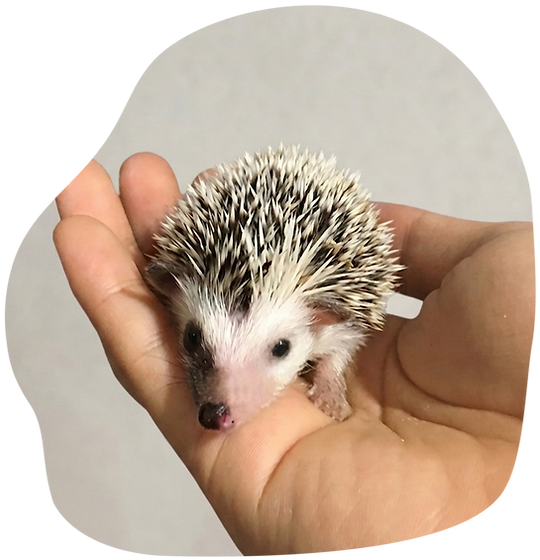
Hedgehogs are adorable and fascinating animals that have become increasingly popular as pets.
This care guide gives you the essential information you need to get started and enjoy the experience of having a healthy, and happy hedgehog.
01
Housing

-
Min. 4 square ft of floor space with a solid bottom.
(no wire grates) -
Good options: Customize plastic bin enclosures, or large guinea pig cages(modified).
-
Cover side wires to prevent climbing.
-
Provide a hide area for security and rest (wooden box, pvc pipe, igloo, snuggle sack, etc.)
-
Keep warm: 70*F - 85*F.
-
Hedgehogs are solitary animals and should be housed alone.

Important
-
Males must not be housed together.
-
Do not house males with females unless for breeding purposes.
-
Cohabilitation can cause stress, serious injury, or death.
02
Bedding

-
Use soft, odor-absorbent, unscented bedding
-
Recommended base: ~1 inch layer of aspen or kiln-dried pine
-
There is no perfect bedding—adjust based on your hedgehog’s needs
-
Fleece bedding can work but has limitations
-
May be shredded by active or digging hedgehogs
-
Loose threads/shreds can wrap around limbs (circulation risk)
-
Not odor-absorbent; requires frequent washing
Important
-
Avoid cedar wood shavings (toxic oils; causes liver and respiratory damage).
-
Avoid unprocessed pine shavings (contains harmful phenols; “clean” smell = chemicals).
-
Avoid scented or dyed bedding (can trigger allergies and respiratory issues).
-
Do not use cat litter (dust inhalation; clumping types can cause fatal blockages if ingested).
-
Avoid straw or hay (too rough; risk of injury, mites, and mold).
-
Avoid corn cob bedding (high mold risk in humid climates; can cause infections).
-
Do not use fabrics with loose threads (can wrap around limbs and cause injury).
-
Avoid any dusty bedding (can damage the respiratory system).
03
Enrichments


-
Hedgehogs need regular exercise to prevent obesity.
-
Provide an 11-inch diameter or larger running wheel.
-
Use only solid-surface wheels (safe and comfortable for feet).
-
Provide toys they can push, chew, or manipulate.
-
Rotate or vary toys to maintain stimulation.
-
Always prioritize safety when introducing new items.
Important
-
Avoid small or narrow wheels (can cause back strain and discomfort).
-
Do not use wire wheels (risk of foot injury and entanglement).
-
Avoid plastic wheels with seams or gaps (can trap toes or break apart).
-
Avoid toys with small detachable parts (choking hazard).
-
Do not give sharp or hard-edged objects (can injure face, eyes, or feet).
-
Avoid soft plastics that can be chewed and swallowed.
-
Do not use items with strings, threads, or tags (can wrap around limbs and cut circulation).
-
Avoid lightweight objects that can break into pieces when chewed.
-
Do not overcrowd the enclosure with too many toys (limits movement and exercise).
-
Avoid unsafe DIY toys without checking materials first.
-
Never assume a toy is safe just because it’s for other pets.
-
If it can break, trap, or be swallowed — do not use it.
04
Diet


-
Provide a diet with ~30% high-quality protein
-
Keep fat low (~10%, not exceeding 15%).
-
Aim for ~15% fiber (chitin is ideal, from insects).
-
Feed approximately 70–100 calories per day
(~1–3 Tbsp of food). -
Use dry kibble as a stable base diet.
-
Offer live insects (e.g., dubia roaches, crickets) for enrichment and nutrition.
-
Encourage activity through foraging (hide small food portions).
-
Adjust diet if overweight (increase protein/fiber, reduce fat).
Important
-
Avoid high-fat diets (leads to obesity, liver and kidney damage).
-
Avoid excessive protein beyond recommended levels (can strain organs).
-
Do not exceed 15% fat content.
-
Avoid overfeeding treats (hedgehogs tend to gorge on preferred foods).
-
Do not rely on treats as a primary diet.
-
Avoid low-fiber diets (can affect digestion and overall health).
-
Avoid diets without insect-based nutrients (lack of chitin).
-
Avoid mealworms as a staple (too fatty, poor nutritional balance).
-
Limit high-fat insects.
-
Do not ignore obesity signs (e.g., unable to roll into a ball).
-
Avoid free-feeding without portion control if weight gain is observed.
-
Avoid sudden diet changes (can cause digestive issues).
-
If it’s high fat, unbalanced, or lacking fiber — do not use as a staple diet.
05
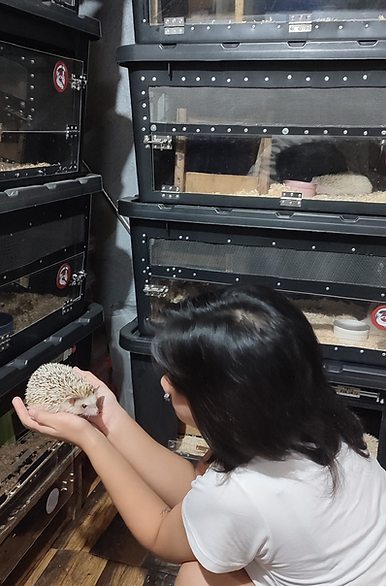
Taming

-
Build scent familiarity
-
Place worn clothing in the enclosure
-
Keep it near their hide for comfort
-
Use positive reinforcement
-
Offer vet-approved treats in moderation
-
Reward calm behavior to build trust
-
Handle regularly
-
Aim for daily interaction (~1 hour if possible)
-
Allow safe exploration (lap or enclosed area)
-
Keep them close to your body for security
-
Learn their behavior cues
-
Flat quills = relaxed
-
Respect boundaries if they resist petting
-
Monitor health consistently
-
Watch for appetite changes, lethargy, or unusual behavior
Important
-
Avoid sudden movements or loud noises (can trigger stress response).
-
Do not grab from above (feels like a predator attack).
-
Avoid using gloves (prevents scent bonding).
-
Do not force interaction if they are stressed or balled up.
-
Avoid inconsistent handling (slows bonding progress).
-
Do not overfeed treats (can lead to obesity and bad habits).
-
Avoid unsafe roaming areas (risk of injury or escape)
-
Do not ignore behavioral changes (may indicate illness).
-
If it causes stress, fear, or breaks trust — do not do it.
06
Handling


-
Handle your hedgehog regularly to build familiarity and trust
-
Approach slowly and quietly to reduce stress
-
Pick up from underneath to support its body and avoid quills
-
Use calm, consistent interaction to help it associate you with safety
-
If needed, use fabric gloves, but pre-condition them with your scent first (keep them near your body before use)
-
Give quiet “lap time” in a snuggle sack if the hedgehog is stressed instead of forcing handling
-
Expect quilling (8–16 weeks) normal shedding of baby spines as adult quills grow in
-
Monitor for mites/fleas (dry skin, crusting, bald patches) and consult a vet if suspected
-
Expect temporary grumpiness during quilling; temperament usually normalizes after
Important
-
Do not touch the hedgehog’s head or face during handling.
-
Do not flip the hedgehog onto its back.
-
Do not rush or force interaction when the hedgehog is stressed.
-
Do not handle without proper support from underneath.
-
Do not assume excessive quill loss is abnormal without checking for mites or skin issues.
-
Do not ignore persistent skin problems, bald patches, or severe irritation.
-
Do not overreact during quilling—this is a normal developmental phase.
For more care tips visit our social media accounts:


